
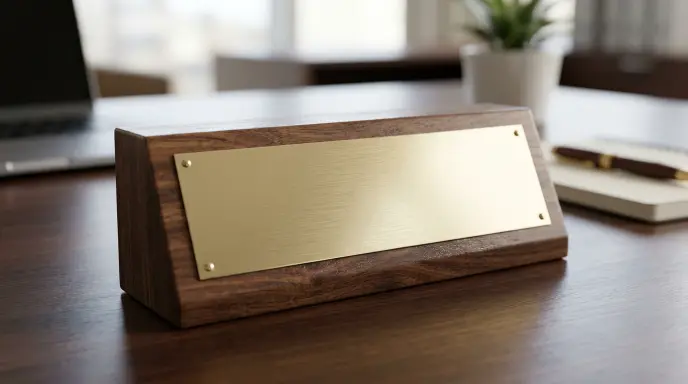
A nameplate can make an ordinary desk feel more personal and organized. Whether you work in a corporate office, run a small business, teach at a school, or have a home office, a well-designed desk sign adds a finishing touch to your workspace. It can display your name, job title, company logo, or even a short message that reflects your personality.
The best name plate for desk use depends on your workspace, personal style, and budget. Some people prefer the classic look of engraved wood, while others choose sleek acrylic, polished metal, or a modern design with LED lighting. There are also plenty of ways to customize a nameplate for a professional gift or a new office.
In this guide, you’ll discover design ideas for different workspaces, popular materials, useful wording examples, and practical tips for choosing a nameplate that looks good and lasts.
1. Classic Office Nameplate Designs
Traditional desk nameplates are a reliable choice for corporate offices, law firms, schools, and other professional settings. They usually feature a person’s name on the first line and a job title or department underneath.
These designs focus on clear lettering, balanced proportions, and a clean finish.
- Black and gold nameplate: A black background with gold lettering creates a formal, polished appearance that suits executive desks.
- Silver metal desk sign: A brushed silver plate offers a professional look without drawing too much attention.
- Mahogany-style nameplate: Dark reddish-brown wood pairs well with traditional office furniture and leather desk accessories.
- Brass-finish desk plaque: Gold-toned metal gives the sign a classic appearance, especially in a traditional office.
- Black acrylic with white text: This simple combination provides strong contrast and is easy to read.
- Walnut nameplate with engraving: Natural wood grain and engraved lettering create a timeless, understated design.
- Two-line designation plate: Place the person’s name above their professional title for a clear, familiar layout.
- Nameplate with company logo: Include a small logo beside or above the name to match the company’s branding.
- Metal plate on a wooden base: The mix of materials adds visual interest without making the design overly decorative.
- Desk nameplate with a pen holder: A built-in pen holder adds practical value while keeping frequently used stationery close at hand.
For a traditional workspace, choose a readable font and avoid adding too many decorative elements. A strong contrast between the lettering and background will help visitors identify the person quickly.
2. Modern and Minimalist Desk Nameplates
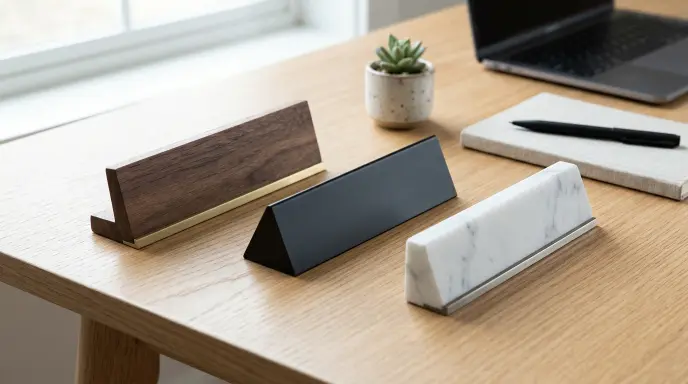
Modern designs work particularly well in startups, coworking spaces, creative studios, and home offices. They often feature geometric shapes, neutral colors, simple typography, and minimal decoration.
A minimalist nameplate should look intentional rather than empty. The lettering, material, and proportions should do most of the work.
- Clear acrylic block: Transparent acrylic gives the name a light, contemporary appearance.
- Frosted glass-effect plate: A translucent finish offers a softer look while keeping the text visible.
- Matte black name sign: A smooth black surface creates a refined appearance with white, silver, or muted gold lettering.
- White-on-white design: Raised white lettering on a white background creates a subtle, modern effect when the lighting reveals the text.
- Floating acrylic letters: Raised letters add depth without requiring a large decorative base.
- Rounded rectangle plate: Soft corners make the design feel approachable while preserving its clean shape.
- Thin aluminum nameplate: A slim metal plate is suitable for desks where space is limited.
- Monochrome design: Use different shades of one color to create a coordinated, understated appearance.
- Geometric desk sign: A carefully designed hexagonal or angled base adds personality without clutter.
- Single-line engraved nameplate: Display just the name in a well-chosen typeface for a clean, uncluttered result.
These designs look best when the surrounding desk is reasonably organized. Pair a simple sign with matching stationery, a neutral desk mat, or a tidy monitor stand to create a cohesive workspace.
3. Wooden Nameplates for a Warm, Natural Look
Wooden desk nameplates are a good option for people who prefer natural materials and a less industrial appearance. They suit traditional offices, home workspaces, libraries, consulting rooms, and creative businesses.
Wood also provides room for different finishes, grains, engraving styles, and combinations with other materials.
- Solid walnut plaque: Deep brown tones and natural grain create an understated premium appearance.
- Light oak nameplate: Pale wood works well with Scandinavian-inspired furniture and bright workspaces.
- Engraved bamboo sign: Bamboo offers a natural look with a lighter color and distinctive texture.
- Rustic reclaimed-wood plate: Visible grain and small variations give the sign a handmade character.
- Wooden nameplate with raised letters: Raised lettering creates depth and makes the name stand out from the surface.
- Two-tone wooden plaque: A lighter face paired with a darker base adds contrast without using bright colors.
- Laser-engraved wooden block: A compact block with a carved name suits minimalist desks and shelves.
- Curved wooden nameplate: A gently curved top adds a decorative detail while keeping the overall design professional.
- Wood and black metal combination: The contrast between natural grain and dark metal works well in industrial-style offices.
- Wooden nameplate with a calendar or pen tray: A combined desk accessory provides a useful place for everyday office items.
Before choosing wood, consider the finish and the environment. A sealed surface is easier to wipe clean, while untreated wood may show stains or react to moisture. If the nameplate will sit beside a sunny window, ask about the finish’s resistance to fading.
4. Acrylic, Metal, and Premium Nameplate Ideas
The material changes the appearance, weight, durability, and maintenance needs of a nameplate. Acrylic is available in clear, frosted, and colored finishes. Metal offers a more formal look, while glass-like surfaces can create a sleek focal point.
Here are ten designs worth considering.
- Clear acrylic with black lettering: A versatile choice for a modern office or reception counter.
- Frosted acrylic with silver text: The soft background creates a contemporary appearance without excessive shine.
- Black acrylic with raised gold letters: This combination works well for executive desks and professional offices.
- Brushed aluminum plaque: A metallic finish suits technology companies and modern workstations.
- Stainless steel nameplate: A clean, durable surface is useful in busy professional environments.
- Brass-look executive sign: A warm metallic finish adds a traditional sense of formality.
- Layered acrylic nameplate: Two or more layers create depth and allow contrasting colors.
- Glass-effect block with etched text: Etched lettering gives the sign a refined appearance, although the text needs sufficient contrast.
- Acrylic plate with a wooden base: This combination balances modern styling with a warmer, natural element.
- Illuminated acrylic nameplate: Built-in lighting can help a sign stand out at a reception desk or in a dimly lit office.
When comparing materials, ask how the lettering is produced. Engraving, raised letters, printed text, and applied vinyl can look different even when used on similar plates. A product photo may not reveal every detail, so request a close-up or design preview before ordering a custom piece.
5. Creative Nameplates for Home Offices
A home office gives you more freedom to personalize your desk. Your nameplate can reflect your profession, interests, favorite colors, or the way you like to work.
The goal is to create something that feels personal without distracting you from your tasks.
- Designer-inspired nameplate: Combine your name with a small pencil, ruler, or creative-tool symbol.
- Developer desk sign: Add a subtle code symbol or a short programming reference beneath your name.
- Writer’s desk plaque: Use a classic serif font and a small book or quill motif.
- Artist’s nameplate: Choose a colored acrylic base with a simple brush or palette icon.
- Gaming-inspired desk sign: Use angular lettering or a restrained LED accent that matches your gaming setup.
- Content creator nameplate: Include a small camera, microphone, or play-button symbol for a personal branding touch.
- Book lover’s desk plaque: Incorporate a tiny stack-of-books illustration or a favorite literary phrase.
- Plant-inspired wooden sign: Pair natural wood with a small leaf engraving for a calm, nature-inspired appearance.
- Personal motto plate: Add a short phrase that motivates you, such as “Make Progress Daily.”
- Hobby-themed desk sign: Include a small visual element related to photography, music, sports, or another meaningful interest.
If you work with clients remotely, keep your professional identity easy to recognize. Your name should remain the most prominent element, while decorative symbols and personal messages should take a supporting role.
6. Executive and Luxury Desk Nameplates
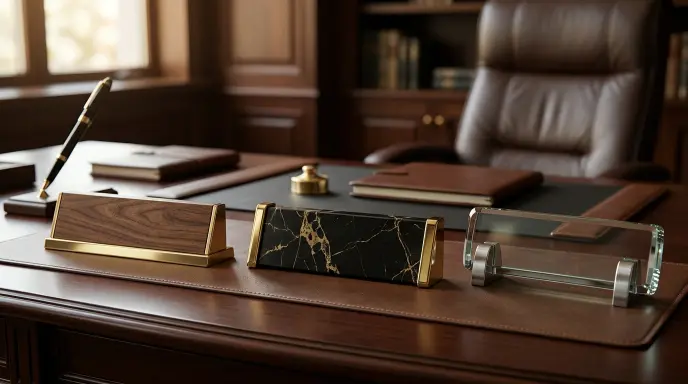
An executive nameplate should communicate professionalism through its materials, proportions, and finish. It does not necessarily need to be expensive or oversized. A carefully designed plate with readable lettering can look more polished than a heavily decorated one.
Consider these options for directors, managers, consultants, business owners, and senior professionals.
- Gold-finish plate on a dark base: A classic combination for a formal office.
- Black marble-effect plaque: The stone-inspired surface adds visual weight and pairs well with dark furniture.
- Walnut and brass nameplate: The mix of warm wood and metal creates a balanced, premium look.
- Deep green with gold lettering: A distinctive alternative to standard black and silver designs.
- Large executive desk wedge: The angled surface makes the name and designation easy to see from across a desk.
- Engraved metal plate with a matching pen set: Coordinated accessories create a unified desktop arrangement.
- Crystal-effect desk block: A clear, polished block can suit formal offices and reception areas.
- Custom nameplate with an embossed logo: A company mark adds a branded finish without taking attention away from the name.
- Minimalist silver-and-black plaque: A restrained design suits contemporary executive furniture.
- Personalized desk set with a nameplate: A coordinated base, pen holder, and paperweight can make a useful professional gift.
For a luxury design, focus on craftsmanship rather than the number of decorative details. Check for even lettering, a stable base, clean edges, and a finish that matches the rest of the desk accessories.
7. Personalized Desk Nameplates With Names, Titles, and Messages
Personalization is often the most important part of a desk nameplate. The same plate can serve very different purposes depending on what it says.
For most professional settings, use the person’s name as the main line and a short title or department as the secondary line. Here are ten wording examples to help you get started.
- Jordan Lee
Marketing Director - Taylor Morgan
Senior Software Engineer - Dr. Maya Patel
Family Medicine - Alex Carter
Creative Director - Sam Rivera, CPA
Accounting and Finance - Avery Brooks
Human Resources - Front Desk
How Can We Help? - The Reading Corner
Books, Ideas, Inspiration - Make Progress Daily
One Step at a Time - Your Name Here
Your Role, Your Story
These examples can be adapted to suit different professions and personal preferences. For a nameplate that will be used in an office, prioritize accurate spelling and the correct job title. For a personal workspace, a short motto or creative label may be more appropriate.
Avoid trying to fit an entire biography on a small plate. Two clear lines are usually easier to read than several lines of small text.
8. Small and Space-Saving Desk Nameplates
Not every desk has room for a large sign. Compact nameplates work especially well on small office desks, shared workstations, reception counters with limited space, and desks covered with monitors or other equipment.
These ten ideas keep the design functional without making the workspace feel crowded.
- Mini acrylic name block: A small transparent block provides a clear name display with little visual bulk.
- Slim metal strip: A narrow plate can sit neatly along the back of a desk.
- Compact wooden wedge: The angled shape supports easy viewing while using limited space.
- Low-profile nameplate: A short base keeps the sign from interfering with the monitor or other accessories.
- Small magnetic name sign: A magnetic format may be useful with a compatible metal stand or holder.
- Clip-on workstation label: A clip-based design can attach to a suitable divider or cubicle panel.
- Replaceable insert plate: A frame with a removable insert makes it easier to update names in shared offices.
- Double-sided tabletop sign: Both sides can display the same name or different information, depending on the intended setup.
- Nameplate with a narrow pen slot: This combines identification with basic storage in a compact footprint.
- Single-letter monogram plate: A small initial paired with a name creates a simple, personalized detail.
Measure the space before ordering. A plate that looks small in a product photo may take up more room than expected. Also check the viewing angle: a low sign can be difficult to read if the desk is unusually deep or visitors stand several feet away.
9. Desk Nameplates for Teachers, Doctors, and Other Professionals
A nameplate can also help visitors identify a person’s role or find the right department. The wording should match the setting, and any professional credentials should be accurate.
These ten ideas cover several common workplace uses.
- Teacher’s desk: Display the teacher’s name and subject, such as “Ms. Parker — Mathematics.”
- Principal’s office: Use a formal plate with the principal’s name and official title.
- Doctor’s desk: Include the correct professional title and specialty, if relevant.
- Dental office: Pair the dentist’s name with “General Dentistry” or the appropriate specialty.
- Law office: Use the lawyer’s name and correct professional designation.
- Reception desk: Display “Reception” or “Visitor Check-In” in prominent lettering.
- Engineering workspace: Include the engineer’s name and relevant department or role.
- Design studio: Use the designer’s name and specialty, such as “Graphic Design.”
- Library desk: Display the librarian’s name or a label such as “Reference Desk.”
- Shared office station: Use the team or department name when several people use the same workstation.
For regulated professions, do not add qualifications or certifications that the person does not hold. If the nameplate will be seen by clients or the public, confirm the exact title before sending the design for production.
10. Desk Nameplates That Make Thoughtful Gifts
A personalized nameplate can be a practical gift for someone starting a new role, opening an office, graduating, or moving to a new workspace. The best choice reflects the recipient’s work and personal style rather than simply looking expensive.
Here are ten gift ideas for different occasions.
- New job gift: A clean acrylic plate with the recipient’s name and new job title.
- Promotion gift: A premium wooden or metal design that acknowledges the person’s achievement.
- Graduation gift: A personalized desk plaque with the graduate’s name and graduation year.
- Teacher appreciation gift: An engraved wooden nameplate with a thoughtful message.
- Business opening gift: A desk plate featuring the owner’s name and company logo.
- Retirement gift: A customized plaque with the person’s name and a short message of appreciation.
- Work anniversary gift: A nameplate that includes a milestone year or years of service.
- Remote-work gift: A compact, stylish sign for a home office or study.
- Team appreciation gift: Coordinated nameplates for colleagues, with a design that suits each person’s role.
- Personal milestone gift: A custom design that marks a new business, qualification, or important career achievement.
Before ordering a personalized gift, verify the spelling, title, preferred name, and design colors. Also consider whether the recipient has a dedicated desk. A portable design is often more useful for someone who changes workstations regularly.
How to Choose the Perfect Desk Nameplate
A good nameplate should be attractive, readable, and suitable for its intended location. Think about the following factors before making your final choice.
Consider the workspace
Start with the desk itself. A traditional wooden desk may suit walnut or brass, while a bright, modern workspace may look better with clear acrylic or brushed aluminum. Matching the existing furniture usually creates a more cohesive result than choosing a design in isolation.
For a shared office, a straightforward professional style is often the safest choice. A personal workspace gives you more freedom to experiment with colors and decorative details.
Choose the right material
Each material offers a different appearance and level of upkeep.
| Material | Main advantage | Best suited for |
|---|---|---|
| Wood | Warm, natural appearance | Traditional offices and home workspaces |
| Acrylic | Lightweight and versatile | Modern desks and reception areas |
| Aluminum | Sleek metallic finish | Contemporary professional offices |
| Brass-finish metal | Formal, classic appearance | Executive desks and professional gifts |
| Glass-effect block | Clean, polished look | Reception areas and premium workspaces |
| Plastic | Often economical and easy to produce | Schools and shared workstations |
Remember that the quality of construction matters as much as the material. Ask whether the sign is engraved, printed, or made with raised letters. Choose a finish that can be cleaned easily and suits the amount of daily use it will receive.
Measure the available space
Check the width and depth of the area where the nameplate will sit. It should be large enough for visitors to read but not so large that it takes over the desk.
A wider plate may be suitable for a long job title, company logo, or two-line layout. A compact design is generally better for small desks or crowded workstations. Check the dimensions of the base as well as the plate itself.
Keep the lettering readable
Choose a font that matches the setting without compromising legibility. Simple sans-serif fonts are versatile for modern workplaces, while serif fonts can suit traditional or formal offices.
Decorative script may work for a short name, but it can become difficult to read at a distance. Use a strong contrast between the text and background, and avoid shrinking the letters just to fit unnecessary wording.
Decide what information to include
Most professional nameplates work well with two lines: a person’s name and their role. You can use a department name instead if the exact job title is long or changes frequently.
For personal desk signs, a short quote, monogram, or hobby-related detail may be more appropriate. Keep the main text prominent so the sign serves its purpose.
Check personalization options
Before placing an order, confirm that the supplier can accommodate your preferred spelling, punctuation, logo, font, and color combination.
Request a digital proof when available. Review capital letters, credentials, spacing, and line breaks carefully. Small errors in custom text can be difficult or expensive to correct once production is complete.
Think about stability and maintenance
A desk nameplate should stand securely and remain easy to clean. If the base is too light or narrow, the plate may tip over when the desk is bumped. For a frequently used workstation, look for a stable base and a durable finish.
If you choose an illuminated model, check how it receives power and whether the cable will fit your desk setup. For wooden designs, ask whether the surface has a protective coating. These small details affect how practical the sign will be over time.
Set a sensible budget
Prices depend on material, dimensions, lettering method, customization, and included accessories. A basic printed plate may cost less than an engraved metal design or a custom-made wooden piece.
Compare the complete product rather than the headline price. A slightly more expensive option may include a stronger stand, better lettering, or a useful desk accessory. For bulk orders, ask whether the supplier offers consistent designs and pricing across multiple plates.
Frequently Asked Questions
What should I write on a desk nameplate?
For a professional desk, put your full name on the first line and your job title or department on the second. You can add a company logo if needed. For a personal desk, a short motto, nickname, or hobby-related phrase can make the design more distinctive.
Which material is best for a desk nameplate?
There is no single best material for every workspace. Acrylic is a versatile choice for modern designs, wood offers a warmer appearance, and metal suits more formal settings. Consider your budget, preferred style, cleaning needs, and how frequently the sign will be used.
What size should a desk nameplate be?
The ideal size depends on the desk, viewing distance, and amount of text. A compact plate may work well for a name alone, while a larger design may be needed for a name, title, and company logo. Measure the available space and check the supplier’s dimensions before ordering.
Are personalized desk nameplates good gifts?
Yes. A custom desk sign can be a useful gift for a new job, promotion, graduation, business opening, or work anniversary. Choose a style that matches the recipient’s workspace and verify the name and title before placing the order.
Can I add a company logo to a desk nameplate?
Many custom-nameplate suppliers offer logo printing, engraving, or raised lettering. Ask which file formats they accept and request a design proof to check the logo’s proportions and clarity. A small logo usually works best when the person’s name remains easy to read.
Should a desk nameplate include a job title?
A job title is useful when visitors need to identify someone’s role. It is optional if the plate is mainly decorative or the person’s name is enough. If the title is long, consider using a department name or a shorter, accurate designation instead.
How do I maintain a personalized desk nameplate?
Follow the manufacturer’s cleaning instructions. In general, a soft cloth is suitable for routine dusting, while harsh cleaners and abrasive materials may damage some finishes. Handle acrylic carefully to avoid scratches, and keep wooden surfaces dry unless the product instructions specify otherwise.
Can I make a desk nameplate at home?
Yes. You can create a simple design using a blank acrylic or wooden plate, adhesive lettering, vinyl labels, or paint. For a more polished result, choose a stable stand, plan the lettering before applying it, and test the layout at the size you intend to use. Engraving or raised lettering may require specialized tools or a local customization service.
Final Thoughts
The right desk nameplate combines clear identification with a style that suits your workspace. A traditional office may call for engraved wood or a metal plaque, while a modern home office might look better with acrylic, minimalist lettering, or a personalized design.
Before choosing one, consider where it will sit, what information it needs to display, and how much space is available. Pay attention to the material, font, finish, and stability of the base. With a little planning, you can choose a desk sign that looks professional, reflects your personality, and remains useful for years to come.